
Our Approach
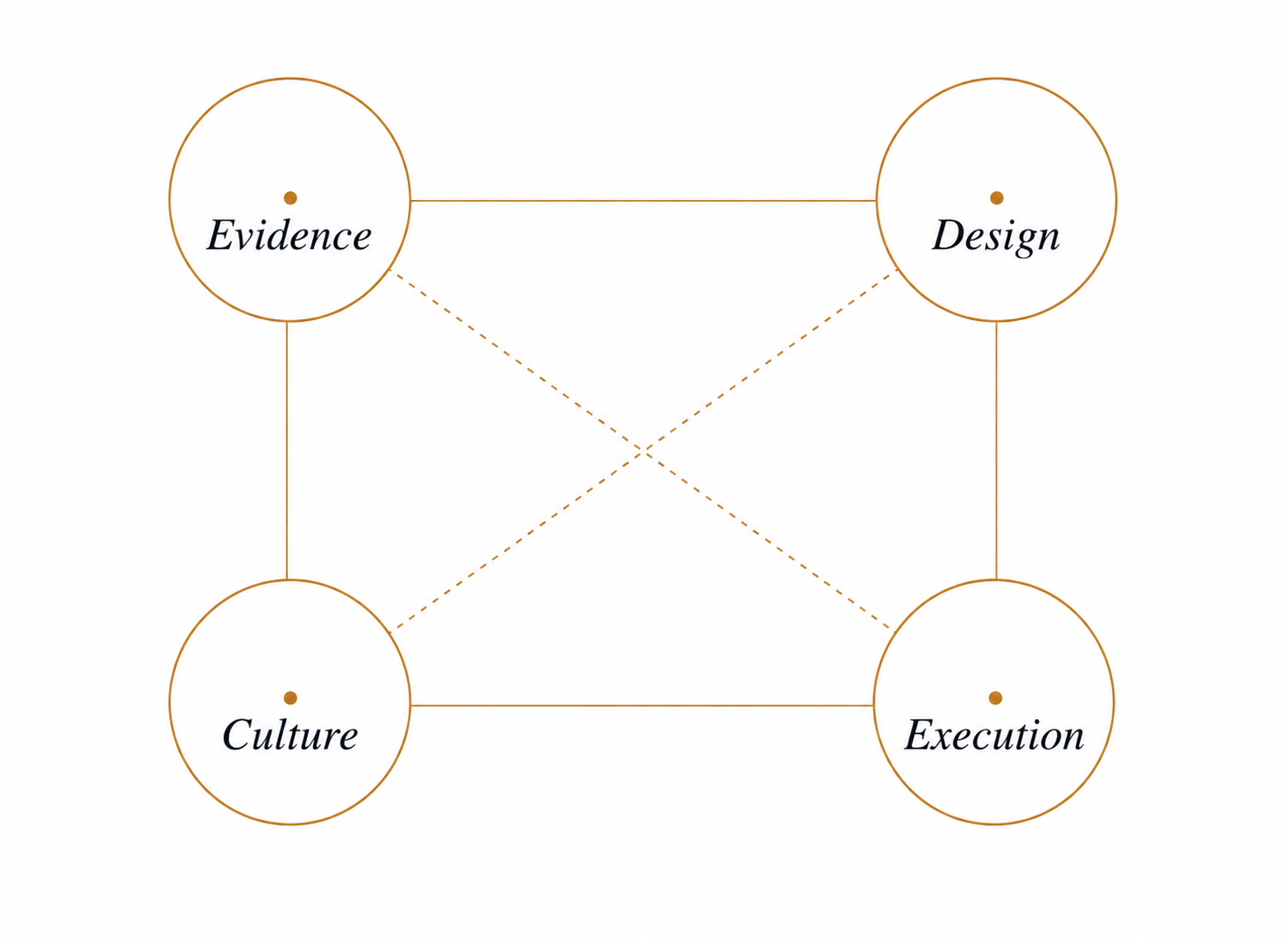
Evidence, design, culture, and execution.
IRPE Consulting is built on a practical premise.
Colleges can have strong values, strong data, and strong plans while still struggling to change outcomes. The missing element is often the design of the institution itself: the way work is organized, decisions are made, evidence is interpreted, responsibilities are assigned, and students move through the college.
This approach draws on institutional research and effectiveness, systems thinking, human-centered design, adaptive design, strategic planning, process improvement, and the lived realities of community college implementation.
Four parts of the approach
01
Diagnose the system, not only the symptom
Persistent outcome problems are rarely explained by one office, one policy, or one student behavior. They usually emerge from interactions among advising, scheduling, financial aid, curriculum, classroom expectations, technology, communication, and institutional routines.
The work begins by clarifying those interactions so leaders can see where the system is producing friction, delay, confusion, or uneven momentum.
02
Treat evidence as a starting point for action
Data can reveal patterns, but evidence only becomes useful when the college has a disciplined way to interpret it and decide what changes. Reports, dashboards, and retreats matter most when they are connected to ownership, decision rights, review cadence, and follow-through.
This is where institutional research becomes institutional effectiveness.
03
Design for the student experience as it is actually lived
Students experience colleges through sequences, handoffs, deadlines, choices, requirements, messages, and moments of uncertainty. Human-centered design matters because it forces the institution to examine how policies and processes feel from the student side, especially for students with limited time, financial pressure, work obligations, caregiving responsibilities, or fragile trust in institutions.
04
Build change that can hold under pressure
Culture is not separate from execution. It shapes what people do when priorities collide, when capacity is tight, when evidence is uncomfortable, and when new routines require sustained discipline. Strong implementation depends on operational clarity and cultural conditions that make the desired practice easier to sustain.
Method
AI as a diagnostic aid, not a substitute for judgment.
IRPE Consulting uses AI-assisted tools to support institutional diagnosis, especially where complexity makes it difficult to see how problems are connected. These tools help examine process descriptions, meeting notes, planning documents, survey findings, student journey maps, operational workflows, and evidence summaries to identify recurring patterns.
They are especially useful for detecting weak or delayed feedback loops, unclear handoffs, diffuse ownership, contradictory assumptions, communication breakdowns, and cultural points where implementation is likely to slow or fragment.
The tools do not replace practitioner judgment, campus expertise, or leadership responsibility. Their value lies in helping colleges see the system more clearly, ask sharper questions, and focus human attention where design, culture, and execution are most likely to shape results.

Intellectual foundation
The approach is informed by field-based writing and by broader work on systems, public-sector implementation, institutional change, and organizational design. Donella Meadows’s Thinking in Systems grounds the emphasis on relationships, feedback loops, delays, incentives, and leverage points. Jennifer Pahlka’s Recoding America reinforces the importance of implementation, delivery, and the gap between formal intent and lived experience.